
Friday, March 6, 2009


1952-1954 Henry J Corsair
The 1952-1954 Henry J Corsair was the four-cylinder companion to the Henry J Corsair DeLuxe, with improved styling and increased prices. The 1952-1954 Henry J Corsair also shared much in common with the 1951 Henry J standard, a four-cylinder model that was intended to be the lowest-end model.
Pluses of the 1952-1954 Henry J Corsair:
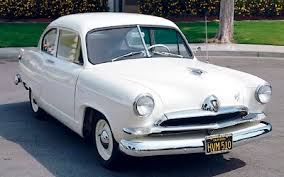
- Better looking (but not much)
- Improved workmanship
- Good economy
- As for 1952-54 Corsair DeLuxe, but with better economy and poorer performance
Minuses of the 1952-1954 Henry J Corsair:
- The same dull styling
- As for 1952-54 Corsair DeLuxe
Production of the 1952 Henry J Corsair:
7,600
Production of the 1953 Henry J Corsair:
8,500
Production of the 1954 Henry J Corsair:
800
Specifications of the 1952-1954 Henry J Corsair:
Wheelbase, inches: 100.0
Length, inches: 181.5
Weight, pounds: 2,370-2,405
Price, new: $1,399-$1,517
Engines for the 1952-1954 Henry J Corsair:
| Type | Size | Horsepower | Years |
| sv I-4 | 134.2 cid | 68 | 1952-1954 |
1922 Dodge Touring Car
 SPECIFICATIONS: L head four cylinder engine. 25 hp pressurized vacuum tank fuel system. 12 volt Northeast electric starter/generator unit. 2 wheel brakes, 32X4 tires.
John and Horace Dodge were both machinists, when Henry Ford started the Ford Motor Company in 1903, the Dodge brothers machine shop built Ford's engines. As part of the deal Henry Ford gave the Dodge brothers a one-tenth share in the Ford Motor Company, which the Dodge brothers later sold for $27,000,000 cash, the original capital for the Dodge Brothers Motor Company.
This 1922 model, Serial # 731464, has been in ths Swope family since 1952. It is little changed from the original car produced by the Dodge brothers on November 14, 1914.
The Dodge Touring car got its first big test as a military vehicle in 1916 when General John J. Pershing took six Dodges on his punitive expedition into Mexico while pursuing the bandit chieftain, Pancho Villa. The success of the Dodge in the rugged wastelands of old Mexico soon was a matter of US Military History, and the Dodge became the US Army's first command car.
Subscribe to:
Posts (Atom)


